
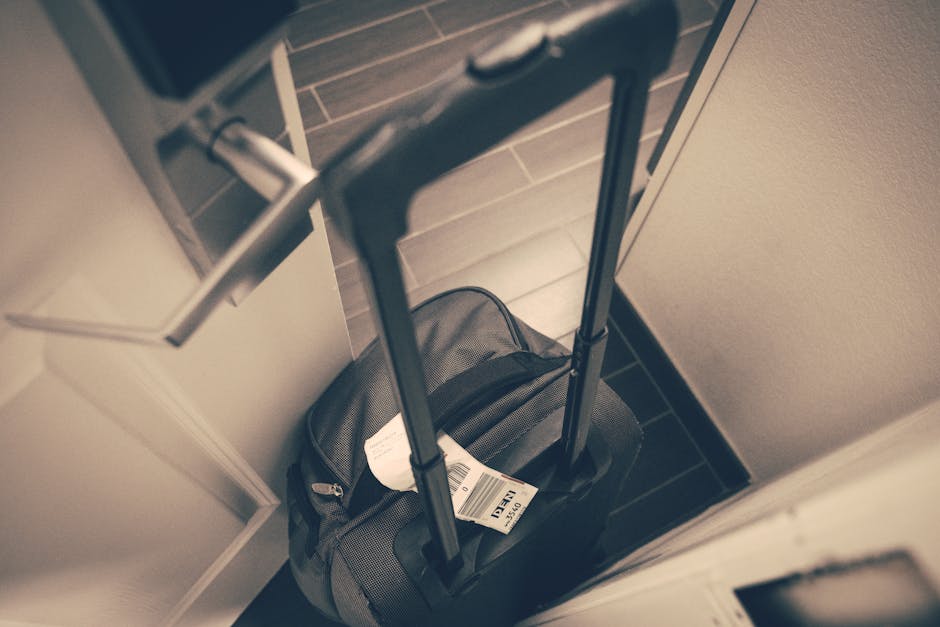
The standard carry-on size for most major U.S. airlines is 22 x 14 x 9 inches. That number — height, width, depth, including wheels and handles — is what American, Delta, United, JetBlue, and Alaska Airlines all enforce. If your bag fits those dimensions or smaller, you board without a problem on all five of them.
Where it falls apart: budget carriers use different limits. Budget carriers in Europe use dramatically smaller limits. And most bags sold as “cabin approved” push right to the edge of the standard, leaving zero margin if an agent decides to measure at the gate.
This guide covers real airline limits, the specific bags that consistently pass the test, and the four situations that turn a carry-on into a gate-check fee you didn’t budget for.
What 22 x 14 x 9 Actually Measures — and Where Shoppers Go Wrong
Carry-on dimensions are always measured as height x width x depth, and they always include every protrusion on the exterior of the bag — wheels, handle housing, exterior zipper pockets, anything that sticks out. This is the detail that causes the most confusion at the point of purchase.
Luggage is typically sold by its nominal size: a “21-inch bag” refers to the height of the main body shell from the bottom of the case to the top of the zipper. It does not include the wheel base (typically 1.5–2 inches) or the handle housing at the top (another 0.5–1 inch). So a bag marketed as “21 inches” can measure 22.5–23 inches in total external height. That’s the actual measurement your airline cares about.
The Away The Carry-On (21.7 x 13.7 x 9 inches, external including wheels) is a clear example of a bag marketed accurately. It sits comfortably under the 22 x 14 x 9 limit with real clearance on every dimension. A generic hardside branded as “22-inch” from an outlet store might measure 22.5 x 14.5 x 9 once you add the wheel base — technically over the limit, even though it’s marketed at the same size.
The Linear Inches Rule
Some airlines express their carry-on limits as a single number: the sum of all three dimensions. American Airlines’ 22 x 14 x 9 adds up to 45 linear inches. Southwest allows 50 linear inches (24 x 16 x 10). Understanding the linear total helps when evaluating a bag that’s slightly off on one dimension but within range on others. A bag at 22 x 15 x 8 (45 linear inches) might technically comply even though it’s 1 inch over on width.
That said, airlines use physical sizer gauges at the gate — not math. If the bag doesn’t fit in the metal frame, the math doesn’t help you. Softside bags have a real advantage here because they compress slightly under pressure. A rigid hardside at exactly 22 x 14 x 9 has zero tolerance. Most experienced frequent travelers recommend staying 0.5 to 1 inch under the maximum on each dimension when buying hardside luggage.
Why Budget Airlines Use Tighter Limits
European budget carriers enforce limits that are fundamentally different from U.S. legacy carriers — and tighter in ways most American travelers don’t expect. Ryanair’s complimentary overhead bin allowance applies only to passengers with Priority boarding or a higher fare tier. On standard fares, the free bag allowance is just 40 x 20 x 25 cm — roughly 15.7 x 7.9 x 9.8 inches. That’s a personal item by U.S. standards, not a carry-on. Bring a standard U.S. carry-on onto a Ryanair flight expecting it to go overhead for free and the gate fee runs €70.
Wizz Air has a similar structure. EasyJet allows overhead bags at 56 x 45 x 25 cm (22 x 17.7 x 9.8 inches), which is closer to U.S. norms, but still narrower in depth than a typical American carry-on. The lesson is consistent: always verify the specific airline’s current policy before you pack, not the bag manufacturer’s marketing claims.
Carry-On Size Limits by Airline — Full Comparison

These figures reflect external dimensions including handles, wheels, and exterior pockets. Budget airline policies change frequently — verify directly with the carrier for international flights.
| Airline | Max Dimensions (inches) | Linear Inches | Overhead Bin Fee if Oversized |
|---|---|---|---|
| American Airlines | 22 x 14 x 9 | 45 | $65–$100 gate check |
| Delta Air Lines | 22 x 14 x 9 | 45 | $65–$100 gate check |
| United Airlines | 22 x 14 x 9 | 45 | $65–$100 gate check |
| Southwest Airlines | 24 x 16 x 10 | 50 | No fee (checked bags free anyway) |
| JetBlue | 22 x 14 x 9 | 45 | $65+ gate check |
| Alaska Airlines | 22 x 14 x 9 | 45 | $65+ gate check |
| Spirit Airlines | 22 x 18 x 10 | 50 | $99+ gate check |
| Frontier Airlines | 24 x 16 x 10 | 50 | $99+ gate check |
| Ryanair (Europe) | 21.7 x 15.7 x 7.9 (paid overhead) | ~45 | €70 gate check |
| EasyJet (Europe) | 22 x 17.7 x 9.8 | ~50 | £48+ gate check |
Southwest is the outlier worth noting. Their larger limit and free checked bag policy make the whole carry-on sizing debate lower stakes than on any other U.S. carrier. Spirit and Frontier technically allow larger overhead bags than legacy carriers — but both charge for overhead bin access on basic fares, making the generous size limit almost meaningless unless you’ve already paid for it upfront.
The practical takeaway: if you fly U.S. legacy carriers exclusively, the 22 x 14 x 9 limit is the one to design around. If you mix in budget carriers — especially European ones — you need either a smaller bag or a willingness to pay fare upgrades that include overhead bin access.
Bags That Consistently Pass the Test
These five bags have been measured against the 22 x 14 x 9 standard. All fit on American, Delta, United, JetBlue, and Alaska Airlines without requiring the overhead bin sizer.
- Away The Carry-On (21.7 x 13.7 x 9 inches, ~$295) — The most widely owned carry-on for good reason. Hardside polycarbonate shell, TSA-approved combination lock built in, internal compression straps. Fits the standard comfortably on all three dimensions. Holds up to several years of weekly travel without cracking or broken wheels. Best all-around pick at the mid-market price point.
- Travelpro Platinum Elite 21″ (21 x 14 x 9 inches, ~$250–$280) — The bag flight crews have used for decades. Eight-wheel spinner, Duraguard coating on the exterior fabric, and the most precise telescoping handle system in this price range. Softside, so it compresses slightly if the overhead bin is cramped. Best choice for frequent flyers who prioritize durability over aesthetics.
- Samsonite Winfield 3 DLX 20″ (20 x 14.5 x 9.5 inches, ~$180–$220) — Slightly under 22 inches in height, polycarbonate shell, four-wheel spinner. The most popular mid-price hardside currently available. All three dimensions come in under the 22 x 14 x 9 limit with room on each axis. Best for price-conscious buyers who want a hardside without paying Away or Rimowa prices.
- Osprey Farpoint 40 (21 x 14 x 9 inches, ~$160) — The right answer for hiking trips, hostels, or any travel where you’ll carry your bag on your back. A 40-liter capacity carry-on backpack with hip belt and load-lifting shoulder straps. Meets the dimensional standard on all three axes. The best softside travel pack in this size class by a significant margin.
- Tumi Alpha 3 International Carry-On (22 x 14 x 9 inches, ~$650+) — Sits exactly at the limit, built from ballistic nylon, and comes with a warranty that covers virtually everything short of intentional destruction. Expensive. Also the last carry-on most people will ever buy. Best for road warriors who can justify the price through years of daily use.
One bag to flag carefully: the Rimowa Essential Cabin measures 21.7 x 15.8 x 9.1 inches. It exceeds the standard 14-inch width limit by 1.8 inches. It fits in most overhead bins without difficulty because real-world bins are slightly larger than policy limits — but it will fail a strict sizer check. On full flights where agents are actively measuring at the gate, or on any budget carrier, the Rimowa Essential Cabin is a genuine risk. It’s a beautiful bag. It’s also slightly wrong for strict compliance travel.
Four Mistakes That Get Bags Gate-Checked

Gate-check fees run $65–$100 on legacy U.S. carriers and can hit $99+ on Spirit or Frontier. These are the situations that cause it most consistently.
- Buying based on interior dimensions. A common retail tactic — listing the interior cubic inches or interior height measurement prominently. The airline measures the outside of your bag, not the packing space inside. A bag with 40 liters of interior volume and thick shell walls might measure 23 x 15 x 10 externally. Always search for external dimensions before purchasing, and if the product listing only shows interior measurements, treat that as a red flag.
- Overpacking a softside bag. A softside carry-on that measures 22 x 14 x 9 when empty can expand to 22 x 14 x 11 when stuffed past capacity. The zipper panel bulges outward. It no longer fits the sizer. Hardsides don’t have this problem — the shell is the same size full or empty. If you fly with a softside, leave the bag slightly under capacity, especially for the depth dimension.
- Flying regional jets with a full-size carry-on. Smaller regional aircraft — the Embraer 175, CRJ-700, CRJ-900 — have overhead bins that physically cannot fit a standard 22 x 14 x 9 bag when placed wheels-first. On these flights, agents gate-check full-size carry-ons routinely, regardless of whether the bag meets size policy. It is not a policy enforcement issue. The bin opening is simply too narrow. If your itinerary includes a regional connection, a 20-inch or smaller bag eliminates this problem entirely.
- Trusting “cabin approved” tags on the bag. That tag is marketing copy, not a regulatory certification. The manufacturer is not guaranteeing compliance with any specific airline’s current policy. The airline’s size chart, updated on their website, is the only authoritative source. Check it before every trip if you’re flying an unfamiliar carrier.
Personal Item Sizing: The Questions Most Travelers Get Wrong
What exactly qualifies as a personal item?
A personal item is the second piece of luggage you’re allowed to bring onboard — the one that stows under the seat in front of you rather than in the overhead bin. Most U.S. airlines allow one personal item in addition to one carry-on. The general limit across legacy carriers is roughly 18 x 14 x 8 inches, though precise numbers vary by carrier and enforcement is inconsistent.
Which specific bags work reliably as personal items?
The Osprey Daylite Plus (20L, 19 x 11 x 8 inches) fits under most seats without issue. The Peak Design Travel Backpack 20L (20 x 12.5 x 5.5 inches when fully compressed) qualifies as a personal item on most U.S. airlines. Standard laptop bags, structured totes, and small duffels in the 18 x 14 x 8 range work reliably. A 40L travel backpack is not a personal item under any reasonable interpretation of any airline’s policy, regardless of what travel blogs say.
Is personal item sizing actually enforced?
Rarely at the gate on legacy carriers. Very aggressively on Spirit and Frontier. Those two carriers have personal item limits of 18 x 14 x 8 inches and actively measure bags when flights are full. The fee for an oversized personal item on Spirit runs $99+ at the gate. On American, Delta, or United, a daypack that’s two inches over in one dimension almost never gets flagged. The enforcement gap between budget and legacy carriers is real and significant — budget carrier travelers need to be more precise.
What carry-on plus personal item combination maximizes legal packing capacity?
A 22 x 14 x 9 inch hardside paired with a 20L daypack gives you the maximum allowable volume on most U.S. airlines. That combination totals roughly the same packing capacity as a 28-inch checked bag — enough for two weeks of efficient travel. The Away The Carry-On paired with the Cotopaxi Luzon 18L daypack (~$65) is the most common real-world version of this setup among frequent travelers who avoid checked baggage fees entirely.
When to Skip the Carry-On Strategy Entirely

The carry-on-only approach makes financial sense when you’re avoiding checked bag fees on a carrier that charges for them, traveling on a mainline jet (Boeing 737, Airbus A320/A321), and flying nonstop or with mainline connections. That’s the scenario where the math works.
Regional jet connections break the strategy. If any leg of your trip operates on an Embraer 175 or CRJ-900, your full-size carry-on gets gate-checked regardless — you just lose the choice of when and how it happens. Checking it at the counter at least keeps it tracked in the system from the start.
On Southwest, where two checked bags fly free for every passenger, the financial case for carry-on-only essentially disappears. Bring the larger bag, pack what you actually need, and board without anxiety over overhead bin space.
For anyone flying into Europe on budget carriers, a 22 x 14 x 9 bag is often too large to fly overhead for free. Either buy a priority boarding upgrade that includes overhead access, or travel with a 20-inch or smaller bag that meets the smaller European limits. The Travelpro Platinum Elite 20″ (20 x 14 x 9 inches, ~$230) hits a size that works on both U.S. legacy and most European budget carriers simultaneously — the most versatile option if you regularly cross between those two systems.